Gone for Real: What Scandinavians Understand About Disappearing Completely
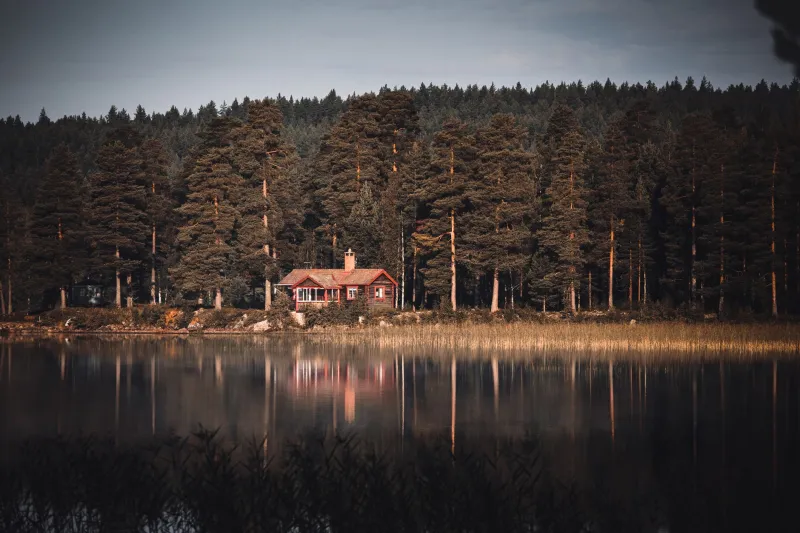
Somewhere in a cabin outside Bergen, a senior project manager at a Norwegian tech firm is unreachable. Not "mostly unreachable" or "checking in once a day just in case." Actually, genuinely, fully unreachable. Her colleagues know this. Her clients know this. Nobody is panicking.
In the US, that scenario sounds either like a fantasy or a firing offense — depending on your industry.
We've built an entire professional culture around the idea that being reachable is the same as being responsible. That answering a Slack message from a beach chair is a sign of dedication rather than a symptom of something we maybe should have addressed in therapy. We wear our inability to disconnect like a badge, and then we wonder why we come back from vacation more exhausted than when we left.
Scandinavians, broadly speaking, do not do this. And the gap between their approach and ours reveals something uncomfortable about what we actually believe work is for.
The Out-of-Office Email Is Already a Confession
Here's something worth sitting with: the standard American out-of-office reply is, at its core, an apology. I'm away, but here's who you can reach. I'll respond as soon as I'm back. Sorry for the inconvenience.
The Nordic version — when one exists at all — tends to read more like a statement of fact. I'm on leave until August 12th. Contact [colleague] if urgent. Full stop. No promise to monitor anything. No implication that your absence is a burden you're doing your best to minimize.
That difference in tone is not accidental. It reflects a fundamentally different belief about what a person owes their employer during time they have explicitly been given off.
In Denmark and Sweden especially, the concept of frihed — freedom, but with a connotation of genuine personal sovereignty — applies to vacation in a way that feels almost radical to American ears. You are not "on call but relaxed." You are gone. The work will be there when you return. It was always going to be there.
Why We Can't Stop Performing Our Absence
American professionals don't just struggle to disconnect — they often actively perform their disconnection while failing to achieve it. The Instagram story from the hiking trail captioned "finally offline 🌲" posted at 2pm on a Tuesday. The LinkedIn post about "taking some much-needed time to recharge" that somehow generates 200 engagements before dinner. The email reply that begins "I know I'm supposed to be off this week, but—"
This is not rest. This is rest-flavored availability.
Part of what drives it is structural — American workers get a fraction of the paid leave their Nordic counterparts receive, so every vacation day carries enormous psychological weight. If you're only getting ten days a year, you're not going to spend them actually offline. The stakes feel too high. The fear of falling behind too real.
But there's something cultural underneath the structural, too. We've tied our identities so tightly to our productivity that genuine absence feels like erasure. If you're not responding, are you still relevant? If nobody needs you for two weeks, what does that mean?
Scandinavians seem less haunted by that question. Possibly because their social systems don't make their entire sense of worth contingent on professional output. Possibly because they've just had more practice.
The Cabin Is Not a Co-Working Space
The Swedish stuga — the summer cottage, often simple, often in the woods or by water — is a cultural institution. Same with the Norwegian hytte. These are not luxury retreats with fiber internet and ergonomic chairs. They are, by design, places where the ordinary rhythms of working life don't quite reach.
That's the point. The physical remove is meant to enable the psychological remove. You go somewhere that makes it harder to work, so that you actually stop working. The architecture of the break is intentional.
Compare that to the American vacation model, which increasingly involves bringing your laptop "just in case," booking hotels with business centers, and choosing destinations based partly on whether the Wi-Fi is reliable enough to join a video call if something comes up.
We've turned our rest into a contingency plan.
What Real Absence Actually Does
There's genuine research on this — the kind that doesn't require a Nordic case study to make the point, though the Nordic case study makes it more vivid. Cognitive recovery from sustained work stress requires actual disengagement. Not reduced engagement. Not "lighter" availability. Actual mental separation from work-related demands.
When that separation happens — when your brain genuinely stops monitoring for work signals — something resets. Creativity, problem-solving capacity, emotional regulation: these all improve with real rest in ways that "working from a nicer location" simply cannot replicate.
Nordic professionals come back from their summer breaks and they are, by most accounts, more productive and more focused. Not despite the total absence. Because of it.
The American version of this logic — that staying slightly tethered keeps you "in the loop" and therefore more effective upon return — is mostly self-soothing. It feels like responsibility. It functions like anxiety.
Letting People Wonder
There's a particular kind of professional confidence embedded in the Nordic approach to vacation that doesn't get discussed enough. It's the confidence to let people wonder where you are.
Not to announce your itinerary. Not to pre-apologize for your absence. Not to make yourself easy to reach as a hedge against being seen as difficult. Just to go, trusting that your value doesn't evaporate the moment you're offline, and that your colleagues are capable of handling things without you for a few weeks.
That's a harder thing to internalize than it sounds. American work culture has spent decades training us to believe that visibility equals value, that presence (digital or otherwise) is the currency of professional credibility. Stepping outside that logic requires not just policy change but something closer to a worldview shift.
You have to actually believe you deserve to disappear. That your absence is not a problem to be managed, but a right to be exercised.
The Real Luxury
Here's the thing about the Scandinavian approach to vacation that gets lost when Americans romanticize it: it's not primarily about luxury. The cabin doesn't have to be beautiful. The destination doesn't have to be impressive. The point is not the Instagram-able quality of the break.
The point is the completeness of it.
Full absence. Real recovery. Coming back as someone who was actually gone — not someone who was technically away but emotionally still at their desk, refreshing their inbox every forty minutes just in case.
That kind of break is available to far fewer Americans than it should be, for reasons that are genuinely systemic and worth being angry about. But for those who have the option and still can't bring themselves to take it fully — the obstacle isn't the calendar. It's the belief that disappearing, even briefly, is something you're allowed to do.
Scandinavians seem to have figured out that you are.
The rest of us are still working on it.