Learn Something Useless: The Nordic Folk School Case Against Job Training
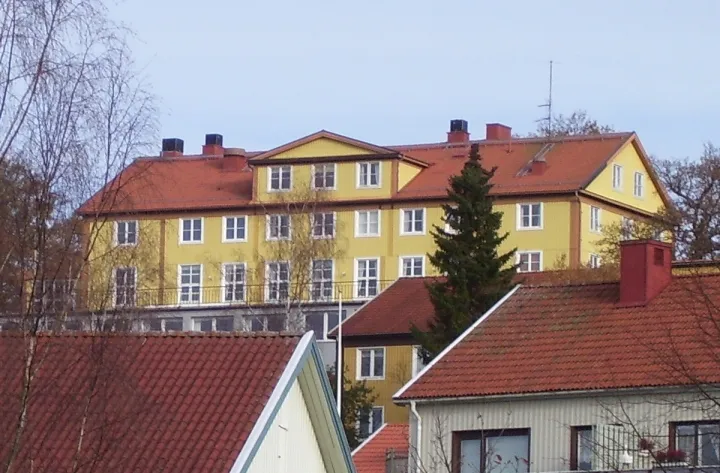
Photo: User Greverod on sv.wikipedia, CC BY-SA 3.0, via Wikimedia Commons
At a folk high school in rural Jutland, the students range in age from 19 to 72. They are studying ceramics, or philosophy, or simply 'life.' There are no grades, no diplomas, no job placement services. At the end of the term, they go home. That's it. No credential, no certificate, no line on a resume. And yet, for tens of thousands of Scandinavians every year, this is the most important education they will ever receive.
The folk high school—folkehøjskole in Danish and Norwegian, folkhögskola in Swedish—is a uniquely Nordic institution. It was invented in the 19th century by N.F.S. Grundtvig, a Danish pastor and philosopher who believed that education should be for life, not for exams. 'Schools for life,' he called them. The idea was radical then and remains radical now: that adults should have a place to learn without the pressure of a degree, a career, or a return on investment.
A School With No Diploma at the End
Today, Denmark has around 70 folk high schools, Norway about 80, and Sweden nearly 150. They offer long courses (four to six months) and short courses (a week or two). Students can study almost anything: art, music, outdoor life, philosophy, journalism, sustainability, even 'death and dying.' There are no entrance requirements, no exams, and no grades. The only requirement is that you show up and participate.
The schools are subsidized by the state, but students pay for room and board. It's not free, but it's affordable—and many students receive stipends. The average age is around 25, but it's not unusual to find people in their 50s or 60s taking a sabbatical to study something they've always been curious about. The atmosphere is informal. Teachers are called by their first names. Meals are eaten together. There's a lot of singing.
The Man Who Invented Learning for Its Own Sake
Grundtvig's vision was deeply democratic. He wanted to educate peasants and workers, not just the elite. He believed that a functioning democracy required citizens who could think critically, engage in conversation, and understand their own history and culture. The folk high schools were designed to build that capacity. They were not vocational schools; they were schools for citizenship.
That idea has echoes in the American tradition, too. The lyceum movement, the Chautauqua institutes, and the early land-grant universities all shared a belief that education should serve democracy, not just the economy. But over the past few decades, American education has narrowed. We talk about 'workforce development' and 'career readiness' and 'return on investment.' We measure success by graduation rates and starting salaries. We treat students as customers and learning as a transaction.
What Americans Lose When Everything Is Job Training
When education is only job training, we lose something essential. We lose the space to ask big questions: What makes a good life? What do I owe my community? What am I curious about, when no one is paying me to be curious? We lose the chance to learn alongside people of different ages and backgrounds, in a setting that isn't stratified by income or achievement. We lose the joy of learning something just because it's interesting.
The folk high school model offers a corrective. It says that education is not just an investment; it's a practice. It's something you do to become more fully human. That might sound idealistic, but the results are tangible. Studies in Denmark have found that folk high school students report increased confidence, better mental health, and a stronger sense of purpose. Many go on to further education or careers, but that's not the point. The point is the learning itself.
The Case for a Gap Year for Grown-Ups
In the US, the 'gap year' is often seen as a luxury for wealthy high school graduates. In Scandinavia, it's a norm—and not just for the young. Folk high schools are a place for adults to take a break from work, to recharge, to explore a new interest, to meet people outside their bubble. It's a kind of sabbatical for the soul.
You don't have to move to Denmark to get a taste of this. You can create your own folk high school experience. Take a class at a community college with no intention of getting a degree. Join a local choir or a writing group. Go on a retreat that has nothing to do with professional development. Read a book that won't help your career. Give yourself permission to learn for no reason at all.
The folk high school is a reminder that education is not a race. It's a lifelong conversation. And sometimes the most valuable thing you can do is sit in a room with strangers, making something with your hands, and realize that you're not doing it for anyone but yourself.