Slow the Table Down: Nordic Dinner Rituals That Actually Build Connection
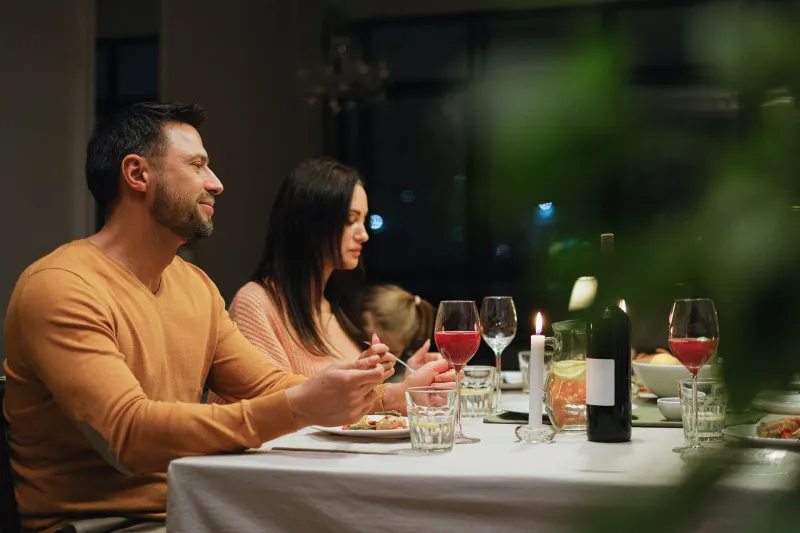
The average American family dinner lasts about twenty minutes. That's including the time it takes to figure out whose turn it is to set the table and whether the youngest kid will eat anything that isn't beige. Twenty minutes of half-attention, phones face-down but still buzzing, someone already pushing back their chair before the last fork has been set down.
The Nordic dinner table operates in a different time zone entirely. Not because Scandinavians are more virtuous or more patient — they're not — but because the structure of the meal itself is designed to slow things down. And structure, it turns out, does a lot of the heavy lifting that willpower never quite manages.
The Setup Is Part of the Ritual
In Denmark and Sweden, the preparation of the table is treated as part of the meal, not a chore that precedes it. Candles are lit — not as a special occasion gesture, but as a default. The table is set properly, which in Nordic homes tends to mean simply but intentionally: real napkins, appropriate lighting, nothing on the table that doesn't belong to the meal.
This matters more than it sounds. The physical environment of a meal signals to everyone present what kind of experience this is going to be. A cluttered table with the TV on in the background signals that dinner is a pit stop. A table with candles and cloth napkins signals that this is a destination. People behave differently in each environment — not because they're consciously performing, but because the space itself sets expectations.
You don't need a Scandinavian design aesthetic to apply this. You need candles (a dollar at most grocery stores) and a decision to clear the table before you set it. That's the whole intervention.
Who Speaks and How
Nordic dinner conversation has an unspoken architecture that American meals rarely develop. There's a general cultural norm around not interrupting, not dominating, and not treating the table as a place to win arguments. This isn't politeness for its own sake — it's a functional approach to making sure everyone at the table actually gets to participate.
In practice, this often means that quieter family members — kids, introverts, people who need a moment to gather their thoughts — get more airtime than they would in the freeform competitive talking style of many American family dinners. The meal becomes genuinely dialogic rather than a platform for whoever speaks loudest.
A useful Nordic-adjacent practice: go around the table with a single question before the meal proper begins. Not "how was your day" — that question has been trained to produce one-word answers. Something more specific. What was one thing that surprised you today? What's something you changed your mind about this week? These prompts feel slightly awkward the first time you use them, and then they become the thing your kids actually remember about dinner.
The Length of the Meal Is the Point
Scandinavia has a tradition of long weekend meals — not elaborate in terms of food necessarily, but extended in terms of time. Hygge has been written about endlessly, and often reductively, but at the dinner table it simply means staying. Sitting with people after the plates are cleared. Letting the conversation go where it goes without rushing toward the exit.
This is countercultural in America in a specific way. We treat lingering as laziness. The efficient dinner — fast, organized, everyone dispersed to their separate screens within the hour — reads as competent family management. But the research on family meal connection is pretty consistent: it's not the food that matters, and it's barely even the conversation. It's the duration. The simple act of staying at the table longer than you technically need to creates a different quality of presence.
Nordic families don't manufacture this through discipline. They create conditions that make lingering natural — the candles that are still burning, the coffee that appears after the meal, the absence of a next thing that urgently needs to happen.
Topics That Matter (and One That Doesn't)
Some Nordic dinner cultures have a loose but real tradition around avoiding complaints as the primary conversational mode. This doesn't mean everything has to be positive — Scandinavians are not relentlessly upbeat people — but there's a distinction between sharing something difficult and using dinner as a daily debrief of grievances.
The distinction is subtle but the effect is significant. Meals that default to complaint mode — traffic, coworkers, the news, whoever wronged someone today — tend to produce a specific kind of exhaustion. Everyone leaves the table feeling slightly heavier than when they sat down. Meals that mix difficulty with curiosity, observation, and genuine interest in other people's inner lives produce something different.
This isn't a rule so much as a reorientation. Ask about something your family member is genuinely interested in, not just what happened to them. The quality of the answer will surprise you.
Starting Smaller Than You Think You Need To
None of this requires a lifestyle overhaul. The Nordic dinner isn't a performance — it's a set of small, deliberate choices that accumulate into something real over time. Light a candle. Clear the table before you set it. Stay for twenty minutes after the meal is technically over. Ask one question that isn't about logistics.
The connection you're looking for at the dinner table isn't hiding behind a better recipe or a more organized schedule. It's hiding behind the pace. Slow it down, and it tends to appear on its own.


